

Somehow or other, it has been about a year since I last posted. In that time, my project focusing on the Farne Islands in Northumberland has sporadically continued, but it’s fair to say that attention has been elsewhere, given the result of a quite different creative collaboration… the wonderful arrival of baby Martha. For now though, I’ll stick to writing about art.
I’ve made two ambitious aquatint etchings, on very large 60x60cm copper plates.
Firstly, ‘Kittiwake, Inner Farne’ (edition of 25).
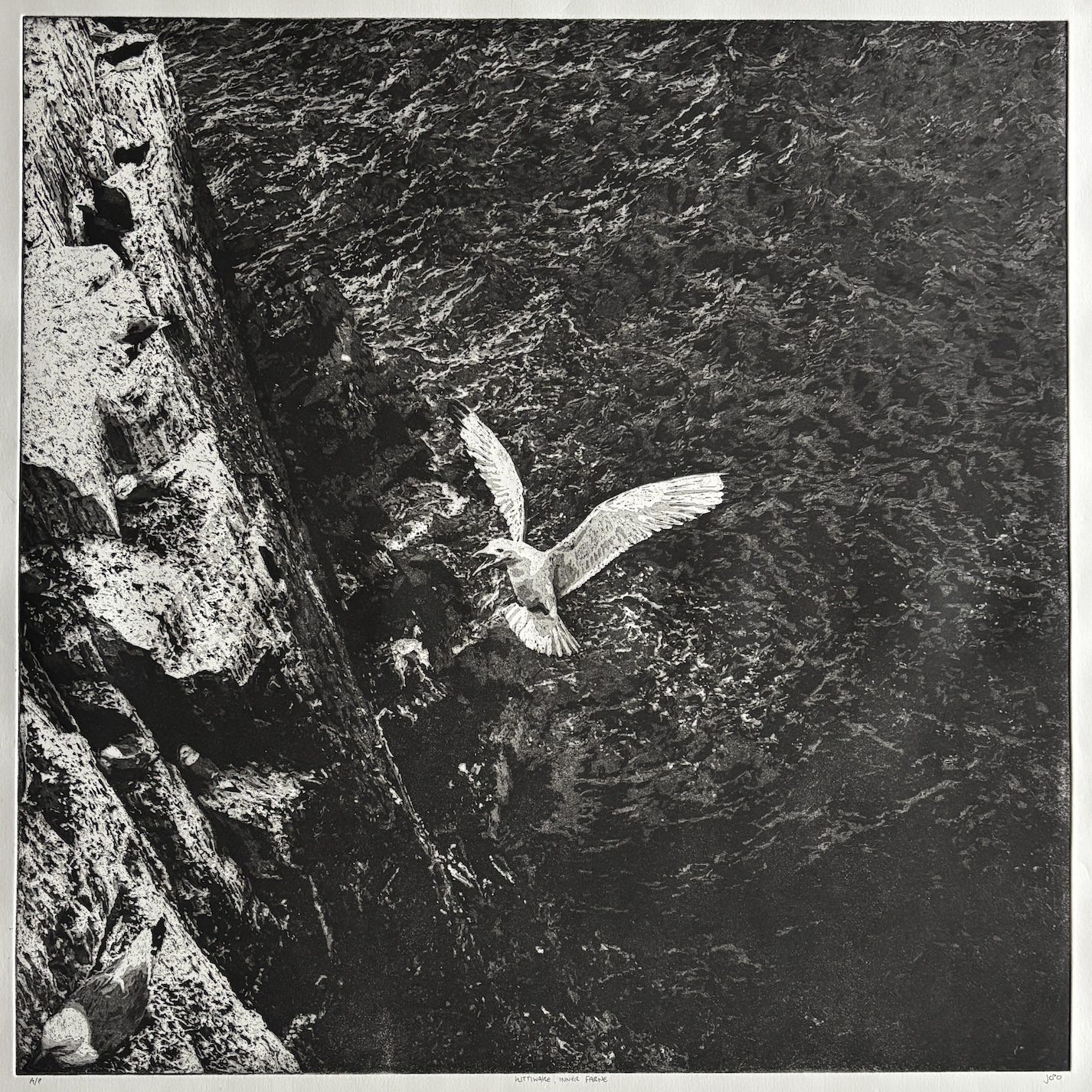
The composition is based on an amalgamation of photographs I took back in May, leaning over the cliff edge, capturing the nesting kittiwakes scrabble and fight in the wind for their piece of ledge, with the cold North Sea swirling and breaking beneath them. Kittiwakes are very charismatic medium-sized gulls with bright yellow beaks and silvery-grey wings tipped in black. They spend the winter out on the Atlantic, only touching land when returning to nest in colonies such as that at the Farnes. Their name is onomatopoeic, being derived from their highly distinctive call.
I was nervous of the time investment when making this plate - it’s made up of six separately drawn layers of tone (you block out all the white highlights first, dunk the plate in acid, then draw in the next lightest shade, back in the acid, etc.) and the rippled textures of the sea and jagged cliff edge were intensely laborious to pick out and separate.
Happily, this print was shortlisted for the Fen Ditton Contemporary Printmaking Prize, and it is about to feature in another of the Cambridge gallery’s superbly curated exhibitions: ‘Works on Paper’ (9-27 September). Do check it out if you’re in the area.
More recently, I’ve just completed another print of the same large size - ‘Eider Duck, Inner Farne’ (edition of 20).
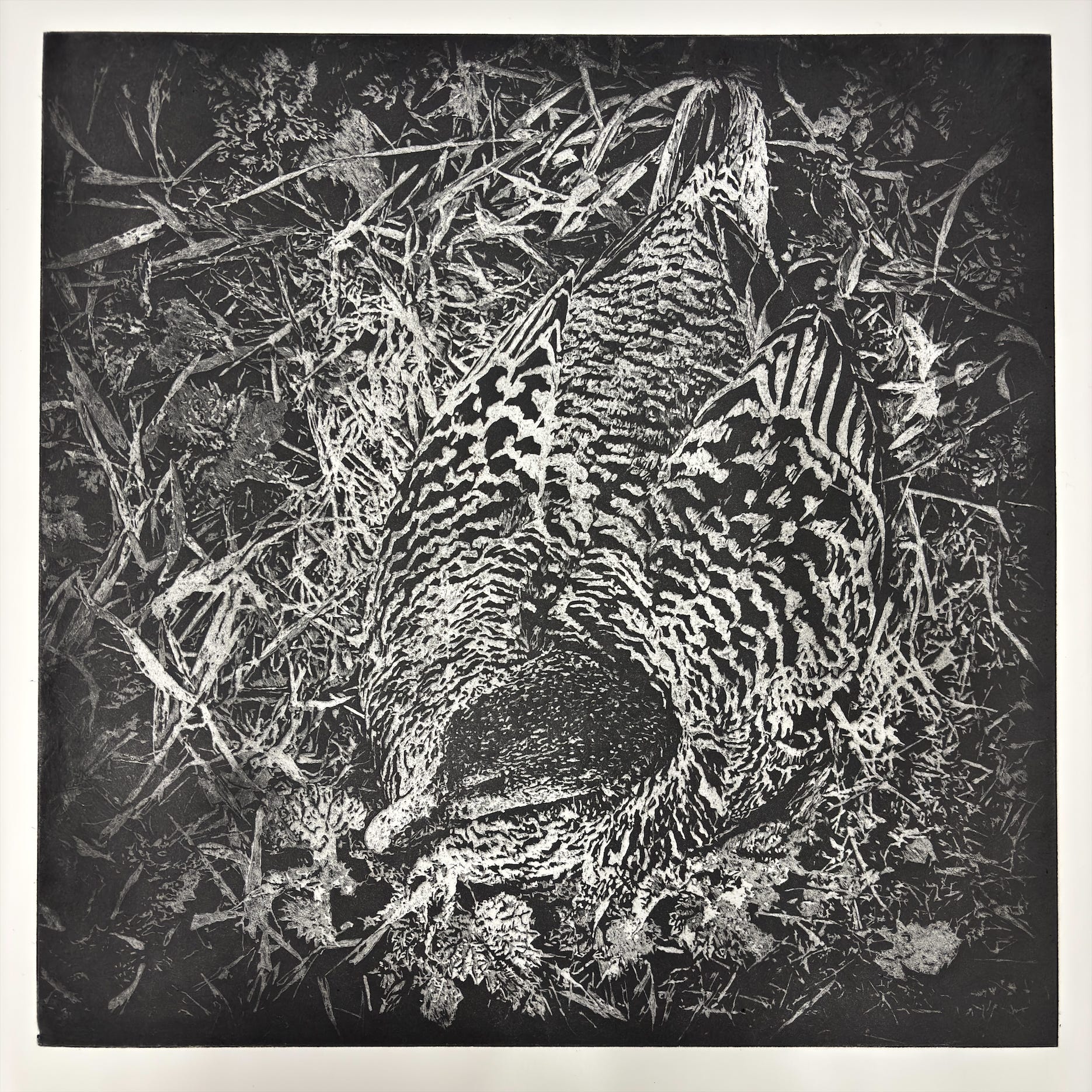
Eider ducks are incredibly characterful, and have a special place in Northumbrian folklore. Of course, they’re best known for being the source of eiderdown, prized as the rarest, lightest, and most insulating natural material in the world. Roughly 80% of the world’s eiderdown is farmed in Iceland, and it’s a highly ethical practice (unlike a lot of goose feather farming). Wild nesting ducks naturally shed their own down when nest-building; Icelandic ‘farmers’ collect the down from abandoned nests, or take small amounts from each still in use - a hugely laborious task. The birds are highly protected, and the industry has a close relationship with managing their habitat. (I haven’t yet read it, but if you’re interested to find out more, friends have spoken about James Rebanks’ book The Place of Tides, which documents the sheep-farmer author’s time on a remote Norwegian island, helping an elderly down farmer.)
On the Farnes, Eider ducks have a different association. Saint Cuthbert, the Anglo-Saxon monk, moved to Inner Farne in 676AD to live as a hermit, and was known to protect the birds, allowing them to nest next to the chapel altar or shelter inside his own small building. Cuthbert also decreed that the birds should not be hunted or disturbed, leading many to suggest this as the earliest known piece of wildlife conservation law anywhere. Certainly, the local name of ‘Cuddy Ducks’ for the Eider persists.
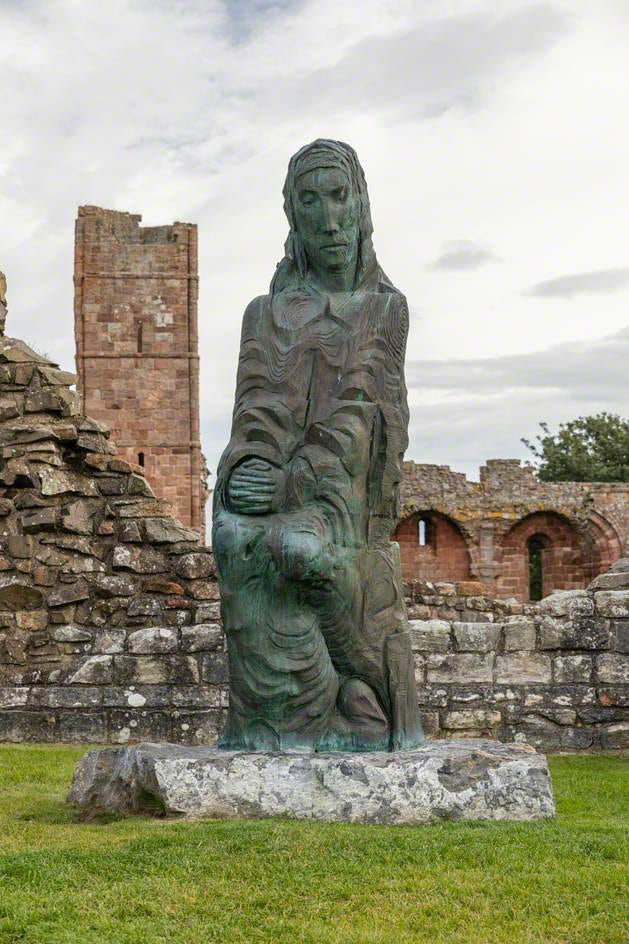
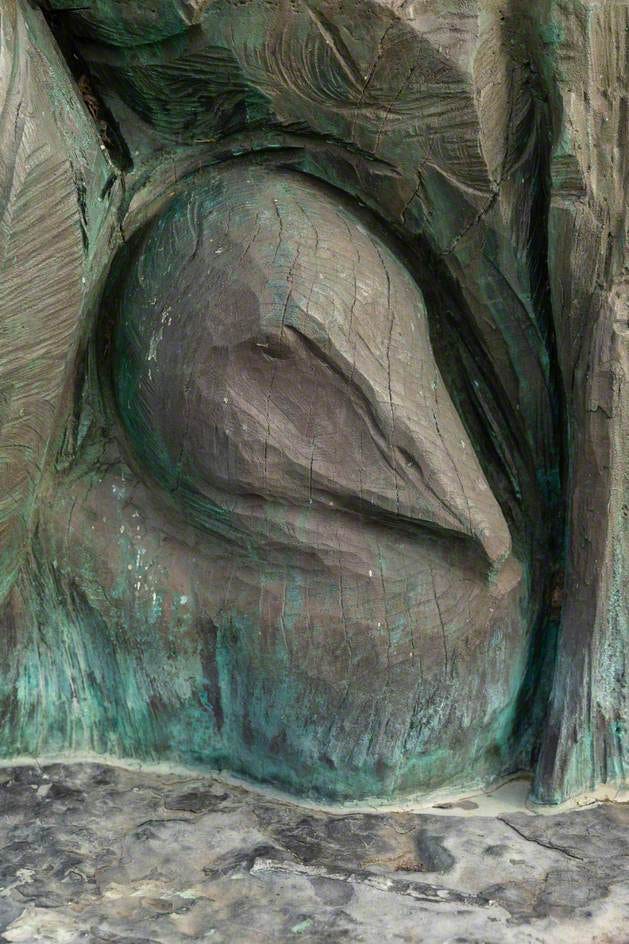
The sculptor Fenwick Lawson carved a stunning depiction of ‘Cuthbert of Farne’ from an elm tree in 1983, and nestled at its feet you can spot the Eider duck. I have strong childhood memories of the duck being pointed out, whenever we went past the original which was then exhibited in the cloisters of Durham Cathedral. A bronze cast of the sculpture is now in the grounds of Lindisfarne Priory.
Back to the etching - again, it was a challenging drawing, with the bird’s intricate plumage offering perfect camouflage for its scruffy nest, which I had found right alongside the chapel on Inner Farne. I decided to strip the image back to three separate tones to lean into this confusion of pattern and texture. Time constraints led to me loosening up (relatively speaking!) in my mark-making, and I think the image is all the better for it.


Watch this space for news of other upcoming exhibitions featuring these prints. Nearly all of my etchings have availability in the edition - just get in touch to find out more.
As I mentioned at the top, life has shifted enormously over the last year, and looking back, I now read a lot more into my focus on the nesting wildlife of Inner Farne.
Superb art work…and a very well-written piece, as ever!